Static Test Pad
A ground-based test stand to measure thrust and temperature from a solid rocket motor. Load cell, thermocouples, microcontroller data logging — built to make a static fire quantifiable.
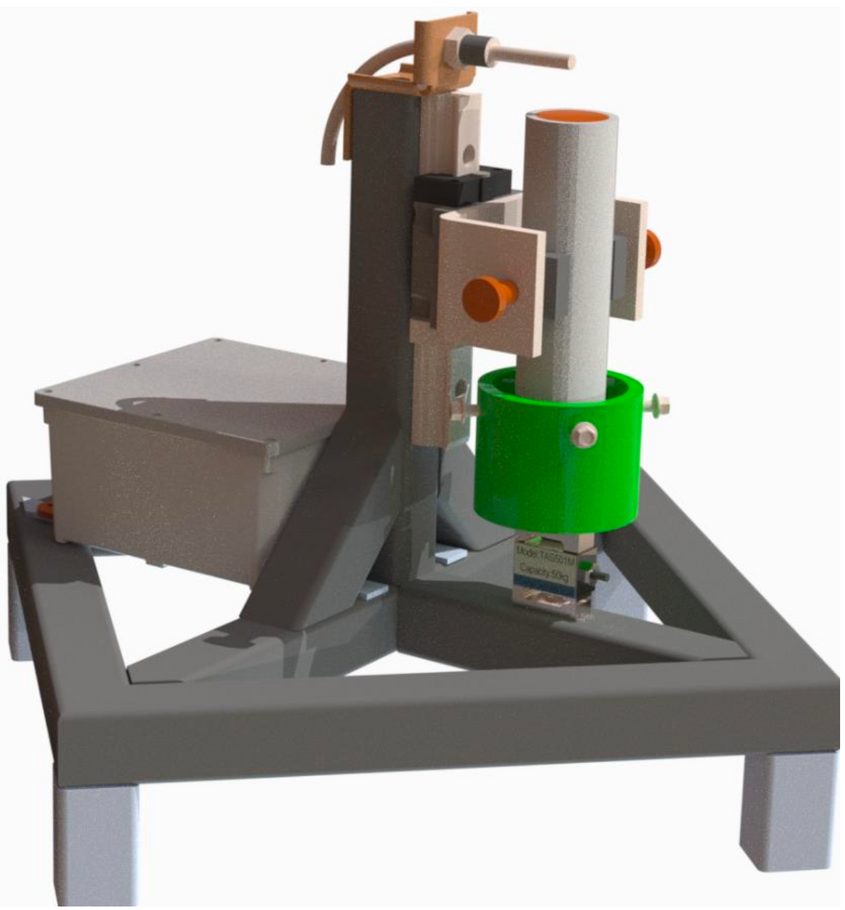
Started as a conceptual design during my internship with Space Technology and Aeronautical Rocketry in Surat, India. The assignment: build a device that could hold a custom solid rocket motor during a static fire and accurately measure what it was doing.
What it does
A load cell underneath the motor mount captures thrust as a real-time force reading. Thermocouples at the nozzle and combustion chamber log temperature throughout the burn. A microcontroller collects the sensor data and transmits it for live visualization — so instead of just watching a rocket fire and guessing how it performed, you get numbers.
What made it hard
Sensor placement is not obvious. The load cell needs to be rigid enough not to flex under impulse loading but sensitive enough to resolve small changes in thrust. The thermocouples sit close to the nozzle, which means heat conduction into the electronics is a real problem to design around.
This was the first project where the failure mode was genuinely dangerous. That changes how carefully you think about tolerances, fastener ratings, and test procedures. You don’t get to prototype your way through a rocket motor test.
What I took away
Instrumentation is its own engineering discipline. The mechanical structure is straightforward — the hard part is getting clean, trustworthy data out of a noisy, high-temperature, high-vibration environment. I’ve been thinking about that tradeoff ever since.